用“故事+动词”赋能 AI 音乐:掌握 Suno V5 的叙事式 Prompt 技巧
本文深入探讨了 Suno V5 中如何通过“叙事式 Prompt + 动态词”来创作更具起伏和情感的 AI 音乐。文章指出,Suno V5 对动态描述和情绪变化更为敏感,建议用户不再堆叠名词,而是通过描述音乐的“过程”来引导 AI。文中提供了核心思路、结构模板、常见错误修正及高级技巧,帮助创作者像“导演”一样掌控音乐的叙事。
为什么你的 Suno 歌听起来“没起伏”?
很多人用 Suno 生成音乐时,都会这样写提示词:
“pop ballad, emotional, female vocal, cinematic, strings, piano.”
看上去挺专业,但生成出来的结果往往“平”“没情绪”“像样板歌”。
原因其实很简单—— 你告诉 Suno 想做什么风格,却没告诉它音乐该怎么“动”。
在 v5 模型中,Suno 的语言理解力变得更强,尤其对“动态描述”和“情绪变化”非常敏感。
这意味着你可以不再堆叠名词,而是用叙事句子 + 动态动词,去“导演”整首歌的起承转合。
一、什么是“叙事式 Prompt + 动态词”?
一句话解释:
不是描述音乐的“样子”,而是讲音乐的“过程”。
举个例子👇
- ❌ 传统写法:
“cinematic orchestral pop, emotional, dramatic build-up.” - ✅ 叙事式写法:
“It begins in darkness with a single voice; strings shimmer and rise, drums erupt into a bright cinematic chorus.”
看出区别了吗?
第二种写法中,你在告诉 AI——这首歌从“黑暗”出发,情绪逐步上升,直到“爆发”。 这样的提示更像一个“小故事”,AI 就能根据你的“情节”安排音乐的动态变化。
二、核心思路:用“故事”让音乐流动起来
在 Suno v5 中,叙事式 Prompt 有三个关键元素:
1. 场景(Scene)
让音乐有一个出发点,比如:
“In a quiet room at midnight…” “Standing on a rainy street…” “The sun rises slowly over a frozen city…”
2. 动态(Movement)
用动词描述音乐如何“变化”:
swell(渐强) / shimmer(闪烁) / erupt(爆发) / fade(淡出) / fracture(断裂) / ascend(上升)
3. 转折(Shift)
说明情绪或能量如何“转变”:
“The beat slows and the world seems to stop.” “A voice breaks through the noise.” “Everything falls silent before the final chorus.”
这三个元素,就像剧本里的“开场、冲突、高潮”,帮助 AI 生成更立体的音乐结构。
三、叙事式 Prompt 的结构模板
你可以按照下面这套骨架来写:
[Genre] + [Tempo/Key] + [Vocal Type]
[Intro] It begins in (场景描述)...
[Verse] (叙事展开 + 动词变化)
[Chorus] (爆发 / 高潮)
[Bridge] (转折 / 停顿)
[Final Chorus] (升华 / 尾声)
Do not: (你不想要的元素)
示例 1:流行抒情曲
Modern pop ballad, 78 BPM, female alto vocal.
[Intro] It begins in a small room at night, just piano and breath.
[Verse] The voice trembles, the bass slowly swells.
[Chorus] Drums erupt, strings shimmer and lift everything upward.
[Bridge] The music fractures into silence, only heartbeat remains.
[Final Chorus] Choir rises with her, bright and triumphant.
Do not: trap 808, robotic autotune, EDM drop.
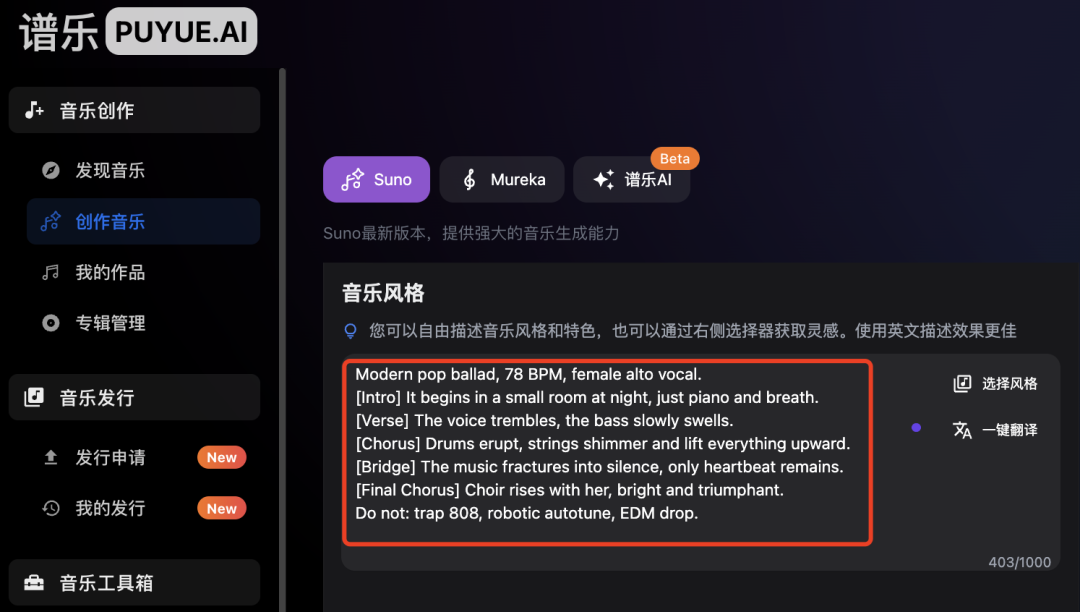
将风格写入谱乐AI(puyue.ai)音乐风格栏
以上样例音频,可以感受下如 prompt 描述的:人声+钢琴进入,50s处主歌部分的鼓点加入,1:35s处的桥段部分音乐停止,只剩下人声。
示例 2:电子舞曲(EDM)
Dreamy synthwave, 110 BPM.
[Intro] It begins under neon lights, pulsing softly like a heartbeat.
[Verse] Bassline grows heavier, drums breathe inandout.
[Drop] The sound erupts—bright, shimmering, euphoric.
[Outro] Everything dissolves into distant echoes.
Do not: distorted guitar, trap hi-hats.
四、常见错误与修正
| 错误写法 | 问题 | 修正示例 |
|---|---|---|
| “sad piano pop, emotional” | 没有情绪变化,AI 不知道怎么发展 | “Begins soft and lonely, then swells into hope and light.” |
| “cinematic, epic” | 太抽象 | “Drums roll like thunder, strings ascend toward the light.” |
| “chorus powerful” | 缺少前后对比 | “Before the chorus, everything drops to silence—then drums erupt.” |
五、想要更高级?加入“节奏/情绪时间轴”
在 Reddit 上,许多创作者会这样控制结构:
“0:00–0:20 soft piano intro, 0:21–0:45 vocals enter, 0:46 drums build, 1:10 full band eruption.”
Suno v5 已经能部分理解时间逻辑。 所以你可以把它写成:
At 0:00, soft ambient pads. At 0:30, bassline enters. At 0:50, drums swell and vocals rise. At 1:10, everything erupts into light.
这种“节奏脚本式” prompt,配合叙事描述,能精准控制结构和张力。
六、结语:写 Prompt 就像写分镜
Suno 不需要你告诉它“是什么风格”, 它需要你告诉它“要讲什么故事”。
叙事式 Prompt + 动态词,就是你和 AI 的“导演语言”—— 你写剧情,它来配乐。
从今天起,
别再写「cinematic emotional ballad」了, 试着写:「It begins in silence. Then everything starts to breathe.」
你会惊讶,AI 居然“听懂了你的故事”。